Kumbhaka Yoga
Kumbhaka: The Ancient Art of Breath Retention — And Why Science Is Finally Catching Up
Pranayama · Breathwork · Online Yoga Classes
Most of us treat breathing as background noise — something the body just handles. But yoga has always pointed to a third, often-ignored piece of every breath: the pause. In Sanskrit, that pause has a name — Kumbhaka, from kumbha, meaning “pot” or “pitcher.” It’s the moment your lungs hold the breath like a vessel holds water, and yogic tradition considers it the most powerful — and most misunderstood — part of pranayama.
If you’ve taken online yoga classes or online pranayama classes before, you’ve likely brushed past Kumbhaka without realizing its depth. This piece breaks down what it actually is, what current research says about it, how to practice it safely, and who should stay away from it entirely.
What Is Kumbhaka, Exactly?
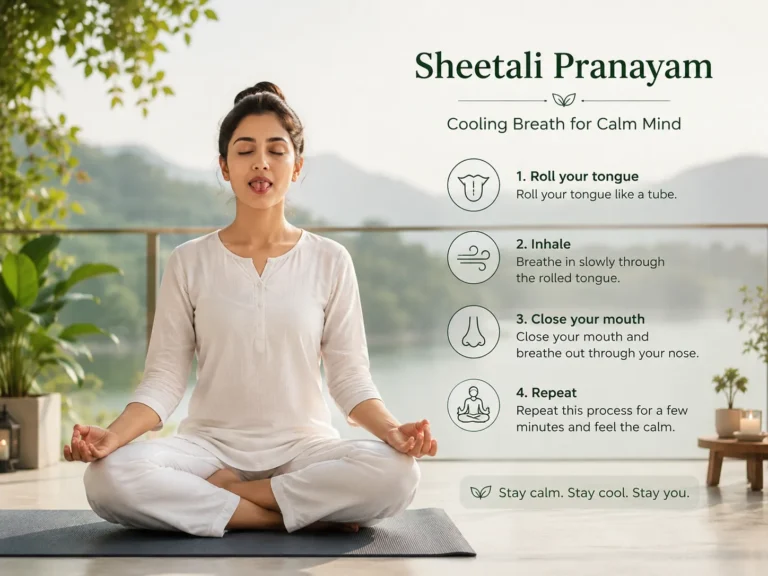
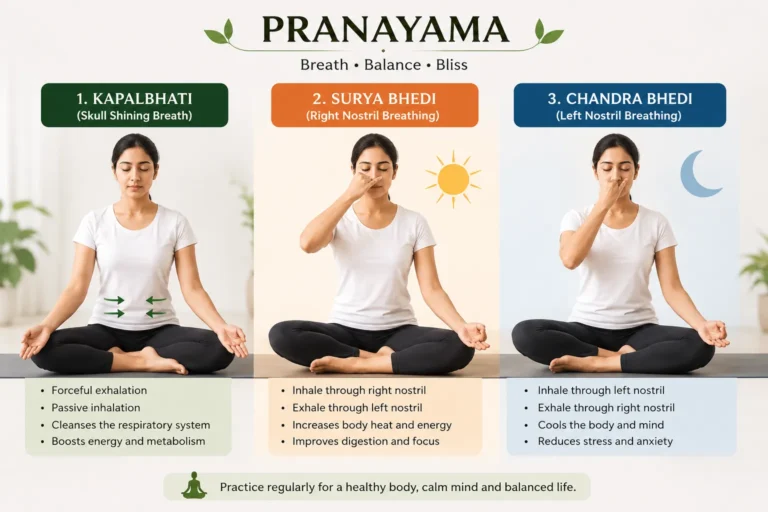
Traditional pranayama has four parts: Puraka (inhalation), Rechaka (exhalation), and the two Kumbhakas that sit between them. It’s not “holding your breath” the way you’d do it underwater — it’s a deliberate, controlled suspension used to direct prana (life energy) and steady the nervous system.
The three main types:
- Antara Kumbhaka (Internal Retention) — Holding the breath in, after a full inhalation.
- Bahya Kumbhaka (External Retention) — Holding the breath out, after a complete exhalation.
- Kevala Kumbhaka (Spontaneous Retention) — An advanced, effortless suspension of breath that arises naturally in deep meditative states, without conscious control.
What Happens Inside Your Body
During retention, carbon dioxide builds up slightly in the bloodstream. This isn’t harmful in short, controlled bursts — it actually triggers the Bohr effect, where hemoglobin releases oxygen more readily into tissues that need it. Over time, regular practice also builds CO₂ tolerance, which is part of why experienced practitioners feel calmer under stress: the body stops panicking at the first sign of rising CO₂.
What the Research Actually Shows
Kumbhaka isn’t just tradition — it’s been studied. Here’s what stands out:
A pilot study at JIPMER, Pondicherry evaluated cardiovascular function during Bahir Kumbhaka (external retention) and compared slow versus fast pranayama in healthcare students. Both styles reduced perceived stress — but the measurable cardiovascular benefit showed up only with the slow-paced practice. Rushed, forceful retention isn’t the goal; controlled and unhurried is.
A study on autonomic responses to breath holding found that after four weeks of consistent pranayama practice, resting heart rate and blood pressure dropped, and the body’s response at the breath-holding “breaking point” changed — pointing to increased parasympathetic (vagal) tone and reduced sympathetic activation. In plain terms: your baseline stress response gets quieter over time.
A 2026 review of Kumbhaka-based pranayama practices reported associations with lower cortisol and epinephrine and higher dopamine, alongside better regulation of the HPA axis (the body’s central stress-response system). The reviewers note this is still an emerging area — but the mechanism is consistent with why practitioners report better focus and emotional steadiness.
Physiological research on brief, intermittent hypoxia — the kind of mild oxygen dip that happens during retention — shows it improves CO₂ tolerance and how efficiently oxygen is delivered to tissue. This is an active, ongoing research area rather than settled medical fact, but it explains the physiological logic behind the practice.
How to Practice Kumbhaka Safely
- Warm up first. Spend 5–10 rounds on slow diaphragmatic breathing before attempting any retention.
- Start with Antara Kumbhaka. Inhale fully, hold gently for 3–5 seconds, then exhale slowly. This is the gentler entry point.
- Build ratio gradually. Once comfortable, work toward ratios like 1:2:2 (inhale:hold:exhale) under guidance — never jump straight to long holds.
- Never strain. Kumbhaka should feel like a pause, not a fight for air. Dizziness, blurred vision, or a racing heart means stop immediately.
- Practice on an empty stomach, ideally in the morning, in a calm, seated position.
- Progress over weeks, not days. This is a slow-build practice — patience is part of the technique.
Who Should Avoid Kumbhaka
This is the part most blogs skip, and it matters: Kumbhaka is not beginner-safe for everyone. Avoid or practice only under direct supervision if you have:
- High or low blood pressure, or any cardiac condition
- Glaucoma or a history of retinal issues
- Epilepsy or a history of seizures
- You are pregnant
- Severe anxiety or panic disorders (breath-holding can trigger episodes in some people)
- Recent abdominal or chest surgery
When in doubt, check with your doctor before starting, and always learn retention techniques from a qualified instructor rather than a video on autoplay.
Learn It Properly — Not from Guesswork
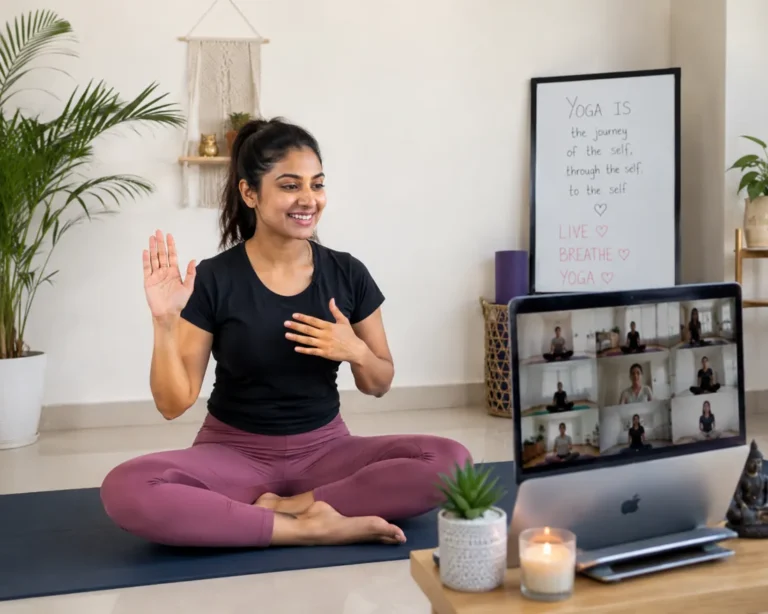
Kumbhaka rewards precision and punishes shortcuts. This is exactly the kind of technique where a few minutes of one-on-one correction from a real teacher saves you months of practicing it wrong. Yognic’s online yoga classes include personalized, live online pranayama classes where breath-retention work is paced to your health profile — not a generic video script. Whether you’re looking to learn yoga online for stress relief, better focus, or general wellbeing, a certified instructor can tell you exactly which Kumbhaka variation is appropriate for you, and which to skip.
Ready to Practice Kumbhaka the Right Way?
Join Yognic’s live, personalized online yoga classes and learn breath retention safely, with guidance matched to your body and health history.
📞 Call / WhatsApp: +91 92202 16173
✉️ Email: support@yognic.com