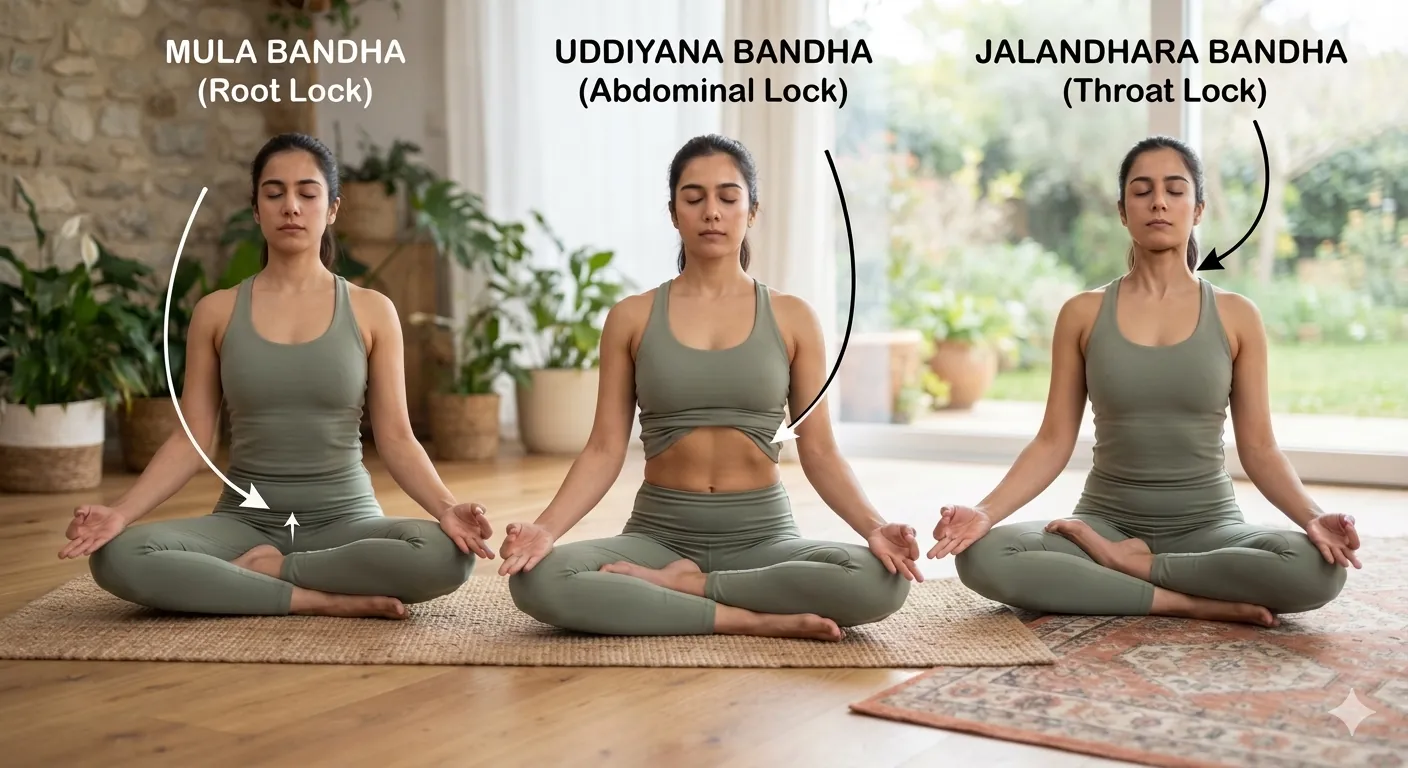
Yogic Bandha’s
Yogic Bandha: The Body Locks That Anchor a Steady Practice
Bandha · Pranayama · Online Personal Yoga Classes
Ask a beginner what pranayama is and they’ll usually describe breathing. Ask an advanced practitioner, and they’ll bring up something most people skip past entirely: Bandha — the internal “locks” that seal energy in place once the breath moves. Without them, pranayama is just breathing exercises. With them, it becomes a complete system.
If you’ve been in online personal yoga classes and heard your instructor say “engage your root” or “draw your navel up and in,” you’ve already touched Bandha without naming it. This piece unpacks what these locks actually do, what research says about them, and how to practice them without hurting yourself.
What Is Bandha, Exactly?
Bandha means “lock,” “bond,” or “seal” in Sanskrit. In yogic anatomy, a Bandha is a deliberate contraction of specific muscle groups that redirects the flow of prana (energy) and stabilizes the body during breath retention. Physically, they’re closer to precise, targeted muscular engagement than anything mystical — think of them as internal stabilizers, similar in spirit to how a lifter braces their core before a heavy lift.
The three main locks:
- Mula Bandha (Root Lock) — A subtle inward and upward lift of the pelvic floor, between the anus and genitals. It’s the foundation lock, engaged first and held longest.
- Uddiyana Bandha (Abdominal Lock) — Drawing the abdomen up and back toward the spine after a full exhale, creating a hollowing effect below the ribcage.
- Jalandhara Bandha (Throat/Chin Lock) — Gently tucking the chin toward the chest, lengthening the back of the neck and sealing energy at the throat.
Maha Bandha (The Great Lock) is what happens when all three are applied together during a single breath retention — root, navel, and throat locked simultaneously. It’s considered an advanced practice and is generally taught only once each lock is stable on its own.
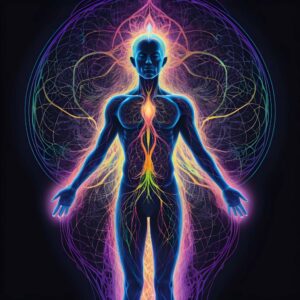
Where Each Lock Sits in the Body
Physiologically, engaging a Bandha does something concrete: it changes intra-abdominal and intrathoracic pressure, briefly alters blood flow to the region, and activates deep stabilizing muscles most people never consciously engage — the pelvic floor, transverse abdominis, and deep neck flexors. That combination of pressure change and muscular activation is exactly why researchers have started studying them for measurable, not just energetic, effects.
What the Research Actually Shows
A randomized crossover study on healthy adults measured heart rate variability and blood pressure before, during, and after Uddiyana Bandha. Results showed a significant rise in markers linked to parasympathetic activity (RMSSD and PNN50) and a drop in heart rate, alongside a temporary spike in diastolic blood pressure that normalized within ten minutes. The researchers’ takeaway: the practice itself briefly activates both stress and calming systems together, but recovery afterward is dominated by the parasympathetic “rest and digest” response.
Research cited in cardiovascular yoga studies has linked the throat lock to reductions in systolic pressure, diastolic pressure, and resting heart rate. It’s also been explored in dental literature as a technique that can ease discomfort during minor procedures like tooth extraction — a reminder that a “seal at the throat” has effects that extend well beyond the neck.
A randomized controlled trial on women with mild pelvic organ prolapse assigned one group to three months of yoga therapy including Mula Bandha. That group showed vaginal and perineal muscle tone normalizing faster than the control group, along with reduced symptom severity. It’s one of the few Bandhas with structured clinical-trial evidence behind it, specifically for pelvic floor health.
Beyond its structural role, research has reported associations between regular Mula Bandha practice and improvements in cognitive performance. The proposed link runs through the same autonomic pathway seen with other Bandhas and breath-retention practices: better vagal regulation tends to track with better attention and mental clarity, though this remains an area that needs larger, more rigorous trials.
How to Practice the Locks Safely
- Learn them in isolation first. Master Mula Bandha alone, then Uddiyana, then Jalandhara — before ever attempting to combine them.
- Uddiyana Bandha is always practiced on an empty exhale, never while holding air in the lungs, and always on an empty stomach.
- Hold briefly at first. A 3–5 second engagement is plenty when starting out. Release immediately if you feel strain, dizziness, or breathlessness.
- Keep the engagement subtle. These are internal lifts, not hard clenches. If your face, jaw, or shoulders are tensing, you’re overdoing it.
- Practice seated and supported until your teacher confirms your form is correct — Bandha work is easy to get subtly wrong without feedback.
- Progress to combinations gradually, moving toward Maha Bandha only once each individual lock is stable and effortless.
Who Should Avoid Bandha Practice
Because Bandhas change internal pressure and involve breath retention, they’re not universally safe. Avoid or practice only under direct, qualified supervision if you have:
- Pregnancy (Uddiyana and Mula Bandha are generally avoided; Jalandhara requires caution)
- Uncontrolled high or low blood pressure, or any cardiac condition
- Hernia, peptic ulcers, or recent abdominal surgery (Uddiyana Bandha)
- Cervical spine issues, neck injury, or vertigo (Jalandhara Bandha)
- Glaucoma or elevated intracranial/intraocular pressure
- Active menstruation (Mula and Uddiyana Bandha are traditionally paused)
These are precise, technical movements happening in sensitive parts of the body. When in doubt, check with your doctor and always learn from a real instructor who can watch your form — not a video you’re following alone.
Get the Form Right, One-on-One
Bandhas are one of the easiest things in yoga to practice incorrectly without realizing it — and one of the hardest to self-correct from a screen. This is exactly what online personal yoga classes are built for. Yognic’s one-on-one online yoga classes pair you with a certified instructor who watches your engagement in real time, corrects your form, and paces the Mula–Uddiyana–Jalandhara progression to your body and health history. If you’re looking for personalized online yoga sessions that go beyond generic routines, this is where Bandha work actually gets learned properly.
Ready to Learn the Locks the Right Way?
Book a personalized online yoga class with Yognic and get real-time correction on Bandha technique, matched to your body and goals.
📞 Call / WhatsApp: +91 92202 16173
✉️ Email: support@yognic.com