Pranayama Part 2
Pranayama Part 2: Bhastrika, Anulom Vilom, Bhramari & Om Chanting
In Part 1 we covered the foundations of conscious breathing. Today we go further — four powerful pranayama practices from the Hatha Yoga Pradipika and Gheranda Samhita that energise the body, calm the mind, and prepare you for deeper meditation.

This post continues our Pranayama series. We’ll practice Bhastrika, Anulom Vilom (Nadi Shodhana), Bhramari, and the chanting of Om — each with correct technique, progression, and the benefits and cautions you need to know before you begin.
 01
01
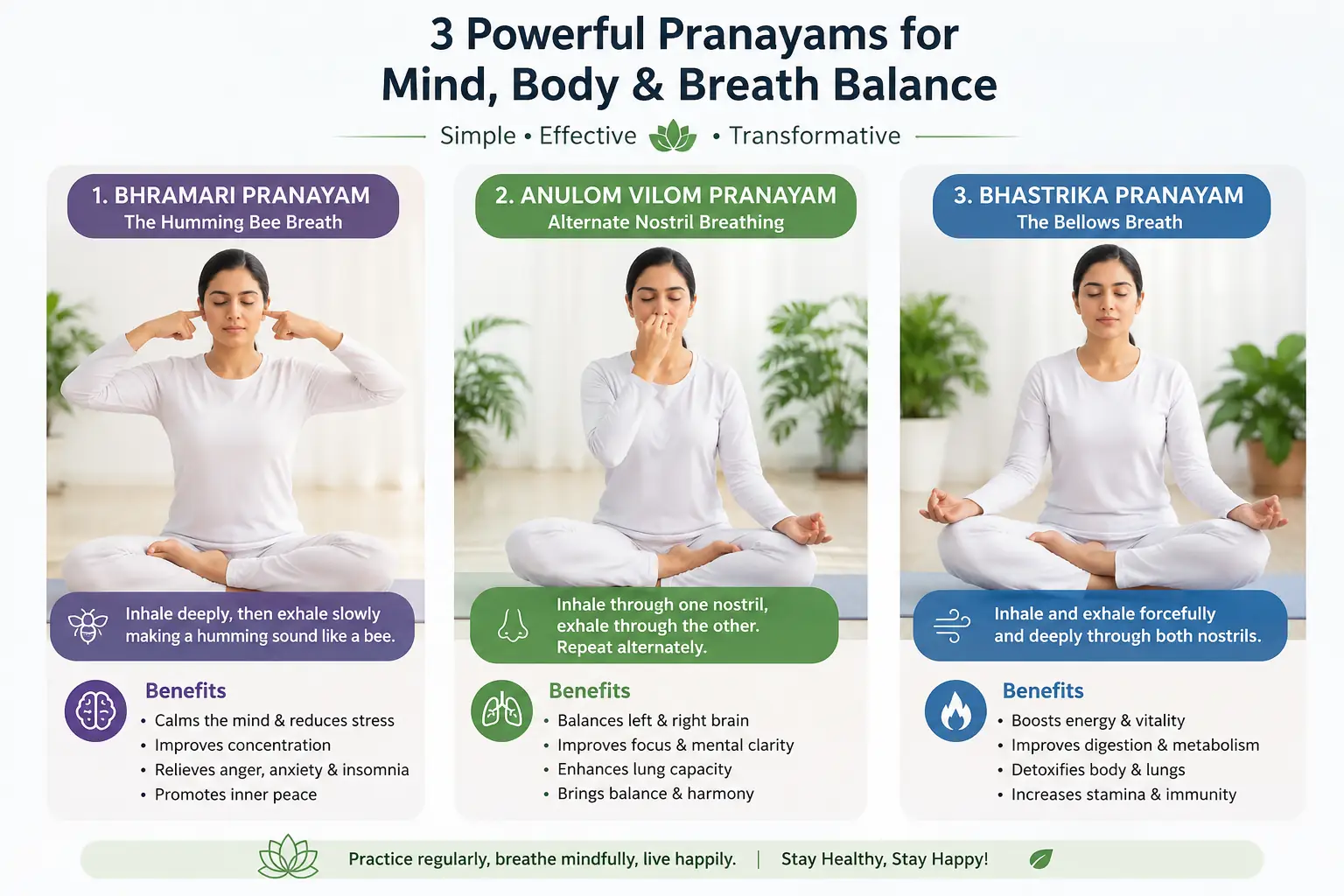
Bhastrika Pranayama — Bellows Breath
Bhastrika means “bellows” — the same tool a blacksmith uses to fan a fire, pumping air in and out rapidly to shape iron. In this pranayama we do the same with our breath: forceful, rapid inhalation and exhalation through both nostrils.
How to practice
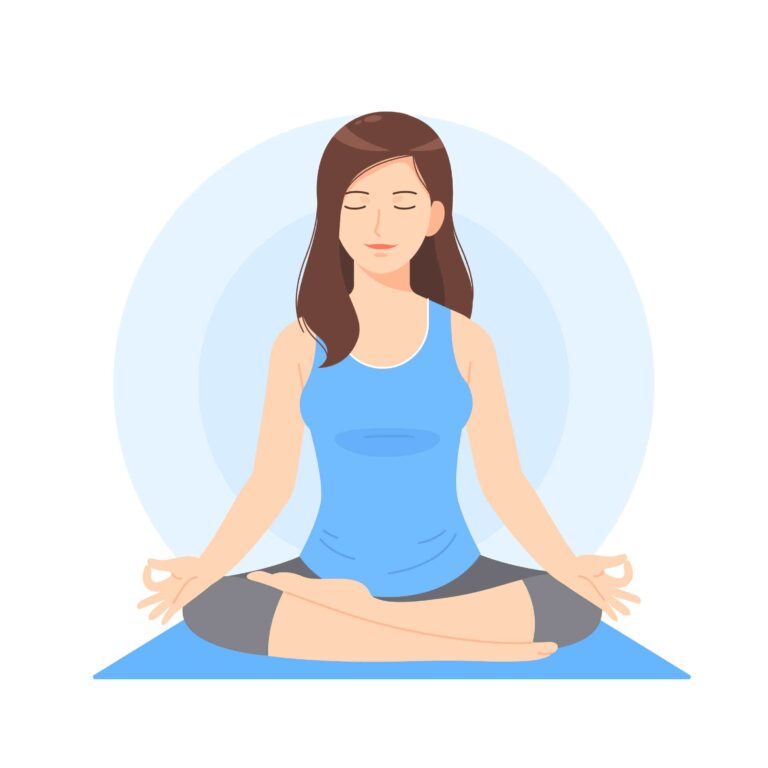
- Sit in any comfortable meditation posture — Siddhasana, Padmasana, or Sukhasana.
- Keep your spine and neck straight throughout, eyes closed, hands resting in Chin Mudra.
- Begin gently: inhale slowly, then exhale forcefully. Repeat a few times to warm up.
- Then move to equal-force breathing — a fast, forceful inhale and an equally forceful exhale, about 1 breath per second.
- With regular daily practice, this can advance to 2 breaths per second — for experienced practitioners only.
Benefits
- Can help reduce belly fat and support weight loss — but only with consistent daily practice.
- Rapid gas exchange in the lungs makes it valuable for asthma and other respiratory conditions.
- Generates internal heat, helping flush toxins and detoxify the body.
- Energises the entire system and strengthens digestion.
- Calms the mind and relieves stress.
Cautions
Avoid Bhastrika if you have high blood pressure, heart disease, ulcers, hernia, or have had recent surgery.


 02
02
Nadi Shodhana — Anulom Vilom (Alternate Nostril Breathing)
Sit in any meditation posture, keeping your back and neck straight, eyes closed. Unlike Bhastrika, this breath should stay soft and easy — never forced, never fast.
How to practice
Begin with about 9 rounds a day. With regular practice, progress gradually — 9 to 12, then 12 to 16, then 16 to 22 rounds.
Benefits
- Improves concentration and keeps the mind calm.
- An excellent practice for relieving fatigue and stress.
- Makes meditation easier afterward — the mind wanders far less.
This pranayama has no known contraindications — it is safe for nearly everyone.
 03
03
Bhramari Pranayama — The Humming Bee Breath
“Bhramari” comes from bhramar, meaning bee — because during this pranayama we hum on the exhale, just like a honeybee’s gentle buzz.
How to practice
Sit in a meditation posture, spine and neck straight. Beginners can start with 6–9 rounds; with steady daily practice this can be extended to a continuous 10–15 minute session.
Benefits
- Softens and improves the quality of your voice.
- Very effective for calming anger and irritability.
- Supportive for anxiety, blood pressure, and diabetes management.
- Helps with poor sleep — regular practice noticeably improves sleep quality.
- Soothing for sore throat and tonsil discomfort.
- Spiritually, it heightens awareness and eases the passage into meditative states.
No known limitations for this practice.

 04
04
Chanting Om
Sit in your meditation posture, spine and neck straight, hands in Chin Mudra, eyes closed. Take one deep, long breath in — and as you exhale, chant Om.
Begin with 3–5 minutes. As your practice deepens, extend it gradually to 10–15 minutes and beyond. The benefits closely mirror Bhramari’s, with even deeper spiritual grounding — the mind settles, stress dissolves, and meditation flows naturally.
What research says about pranayama
Pranayama is a supportive wellness practice, not a substitute for medical treatment — please consult a doctor for any diagnosed condition.
A few important reminders
- Early morning is the best time for pranayama. Practicing in the evening is fine too, but leave at least a 4-hour gap after eating.
- Pranayama is a powerful practice — please don’t experiment with it on your own.
- If you can’t sit on the floor, a chair works perfectly well.
- If any technique feels unclear, ask in the comments, or learn from an experienced teacher first. Practicing incorrectly can have adverse effects — please don’t guess.
- Never practice in a closed room. Keep doors and windows open for fresh air throughout.
Want to learn these safely, live?
Join our online yoga classes and pranayama coaching — guided sessions, real-time corrections, and a practice built around your body.
Stay healthy, stay happy. Har Om.
Please like this post and subscribe to the page for more pranayama & online yoga classes content.
Keywords: online yoga classes, pranayama for beginners, Bhastrika pranayama, Anulom Vilom breathing, Bhramari pranayama benefits, Om chanting meditation, breathing exercises for stress, yoga classes online India