Ardh Matsyendrasana: The half spinal twist pose
Today we’re going to practice a posture that is genuinely one of the most impactful tools available for people managing sugar (diabetes) and high blood pressure: Ardha Matsyendrasana, widely known in English as the Half Spinal Twist. It’s a seated twist that looks simple but works deeply — on the spine, the abdominal organs, and the mind. Let’s walk through it together.
What Is Ardha Matsyendrasana?
Ardha means “half,” Matsya means “fish,” and Indra means “king” — the pose is named after the sage Matsyendranath, one of the founding figures of Hatha Yoga. It is a seated spinal twist in which the torso rotates against a stable, grounded lower body, and it’s considered one of the twelve foundational Hatha Yoga postures.
What the Research Says
- The deep twisting motion compresses and massages the pancreas, which is believed to help enhance insulin production and secretion.
- Some studies have observed the pose helping reduce random blood glucose levels in people with Type 2 Diabetes.
- A 2014 study published in the Journal of Yoga & Physical Therapy reported significant improvement in blood glucose levels in type 2 diabetic patients practising this asana as part of a yoga module.
- Yoga trials by AIIMS Delhi and CCRYN found improved glycemic control and reduced medication dependency in type 2 diabetics practicing specific asanas, including Ardha Matsyendrasana.
There isn’t a large volume of research on this exact pose alone, but evidence on yoga and regular physical activity broadly supports these benefits. Yoga complements medical care — it does not replace it.
How to Practice It
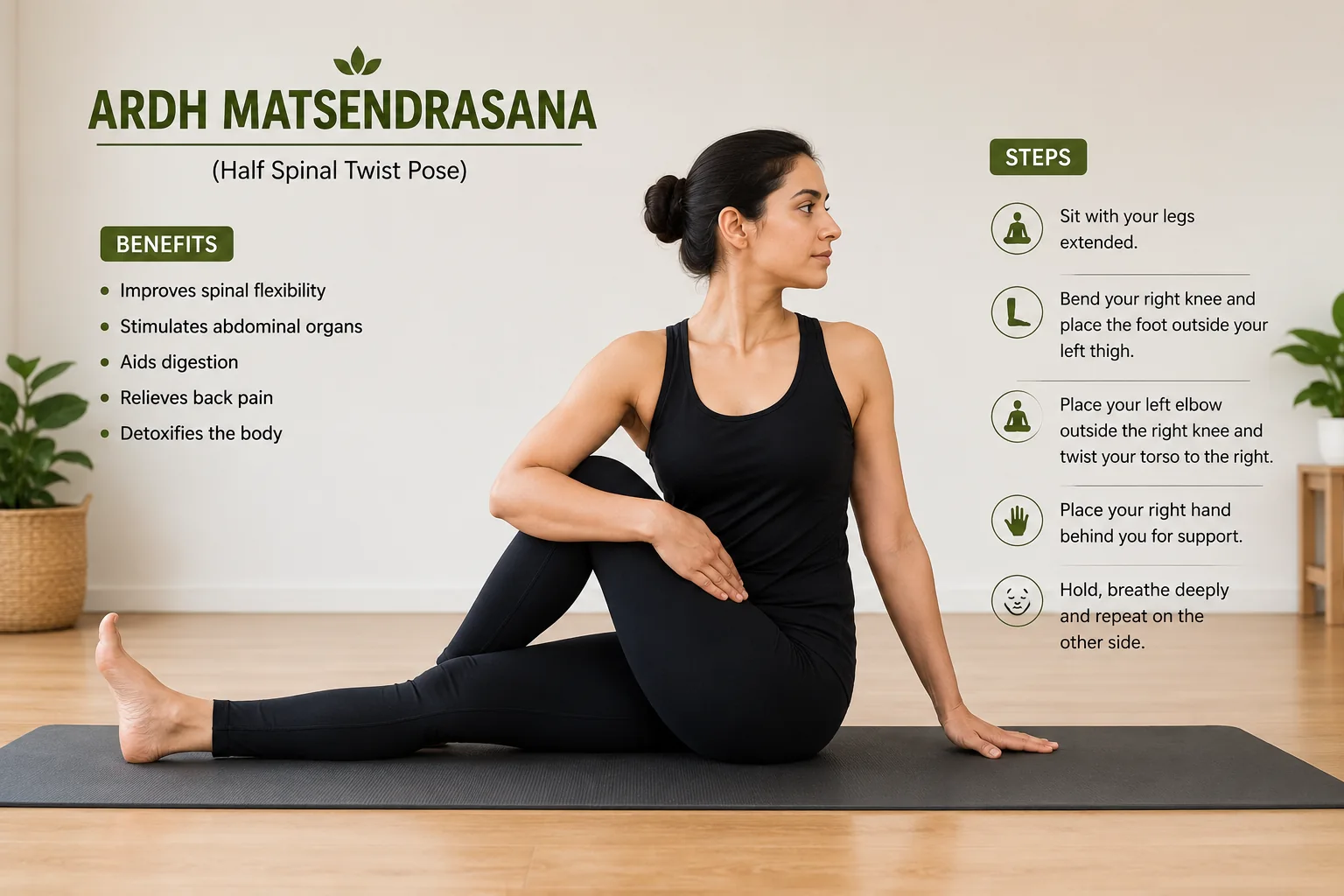
- Sit on the floor with your legs stretched out straight in front of you, spine erect and feet together.
- Fold your right leg and place your right foot flat on the floor outside the left knee, sole resting firmly on the ground.
- Fold your left leg so that your left heel rests beside your right hip.
- Inhale deeply, straighten your spine, and as you exhale, twist your torso towards the right side.
- Let your gaze follow the twist over your shoulder. Hold for a few breaths, keeping the spine long rather than rounded.
- Release gently and repeat the same steps on the opposite side.
Go only as far into the twist as your body allows today. With time and consistent practice, your flexibility will open up and the posture will come more naturally — there’s no need to force it.
Precautions
This is a powerful posture, and a few precautions matter a great deal:
- Avoid this pose if you have an injury to the knees, hips, or ribs.
- Women should not practice this during pregnancy or menstruation.
- Skip it if you’ve had recent surgery of any kind.
- If you have severe back or neck pain, practice only under the guidance of a qualified teacher.
- Never force the twist. Go only as deep as feels comfortable — your range will improve naturally with regular practice.
If you have uncontrolled high blood pressure, a herniated disc, osteoporosis, or any recent spinal surgery, consult a qualified professional before attempting this pose.
Practice Safely, With Guidance
Postures like Ardha Matsyendrasana work best as part of a structured, well-sequenced practice. If you’re managing diabetes, high blood pressure, or simply want to build a sustainable daily habit, our online yoga classes are designed exactly for this — therapeutic, beginner-friendly sessions led live, from the comfort of your home. Whether you’re searching for yoga classes for diabetes, yoga for high blood pressure, or simply the best online yoga classes near me, we’d love to have you in a session.
If you found this helpful, please like this post and share it — and subscribe to our channel so it reaches more people who genuinely need it. With this wish, may you all stay healthy and happy.