
Yoga for stress managment
Yoga for Stress Management: A gentle way back to yourself.
Five simple postures, three breathing practices, and one guru mantra — a complete daily routine to calm the nervous system, quiet the mind, and rebuild the body’s response to stress.
Stress cannot be removed from life — but it can be transformed on the mat.
Stress is not the enemy. It is the body’s oldest, wisest response — a burst of alertness designed to keep us alive in the face of danger. In small doses it sharpens us, motivates us, keeps us moving forward. The problem begins when stress refuses to leave. When the alarm keeps ringing long after the danger has passed, it turns from protector into poison — surfacing as anxiety, depression, high blood pressure, heart disease, and a long list of psychosomatic illnesses that modern medicine is still learning to name.
The pandemic years made this painfully clear. Routines dissolved overnight. Jobs disappeared. Fear moved into every household — fear of the virus, fear for loved ones, fear of a future no one could predict. It was, and for many still is, a season of chronic, low-grade stress that the body was never built to hold.
The good news: the human body is designed not only to feel stress, but to release it. And yoga — quiet, patient, thousands of years old — remains one of the most effective tools we have to do exactly that.
Five postures for a stressed body
Roll out your mat. These five asanas, practiced in sequence, ask nothing dramatic of the body — they simply invite the nervous system to step down a gear.
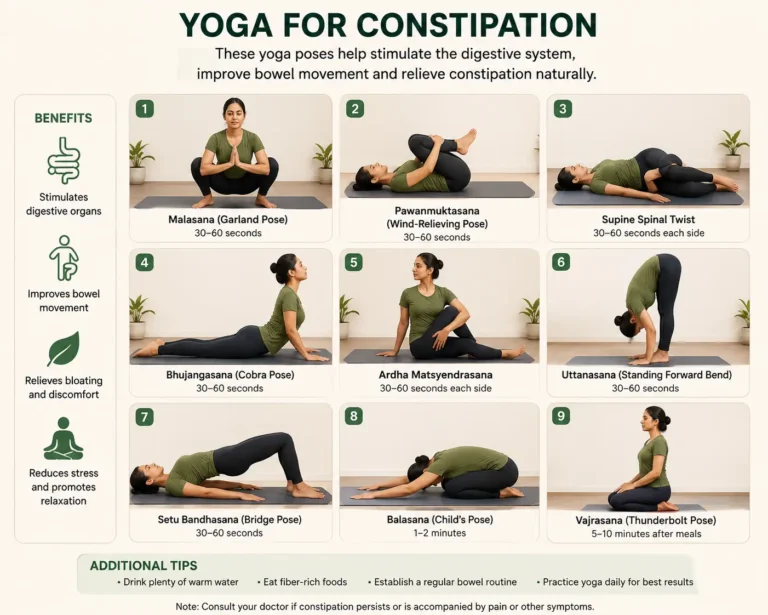
Balasana Child’s Pose
A soft folding forward that quiets the adrenals and lengthens the low back. Balasana signals safety to the brain — a physical reminder that in this moment, there is nothing to run from.
Dwikonasana Double Angle Pose
A gentle inversion that stretches the shoulders and chest — the two places stress loves to camp out. As the head drops below the heart, fresh blood reaches the brain and thoughts begin to slow.
Vrikshasana Tree Pose
Balance requires attention, and attention has nowhere to spare for tomorrow’s worries. Tree pose trains the mind to gather itself into the present — one foot, one breath, one moment at a time.
Setu Bandhasana Bridge Pose
A mild backbend that opens the chest, stretches the thyroid area, and stimulates the vagus nerve — the master switch between “fight-or-flight” and “rest-and-digest.” Hold, breathe, and let the ribs bloom.
Savasana Corpse Pose
The simplest posture, and the hardest. Lie down. Let the body go completely. This is where the practice integrates — where cortisol drops, muscles unclench, and the mind finally learns what it means to be still.
“Consistency is the quiet ingredient. A little every day will do more for your nervous system than an hour once a month.”
Then, the breath.
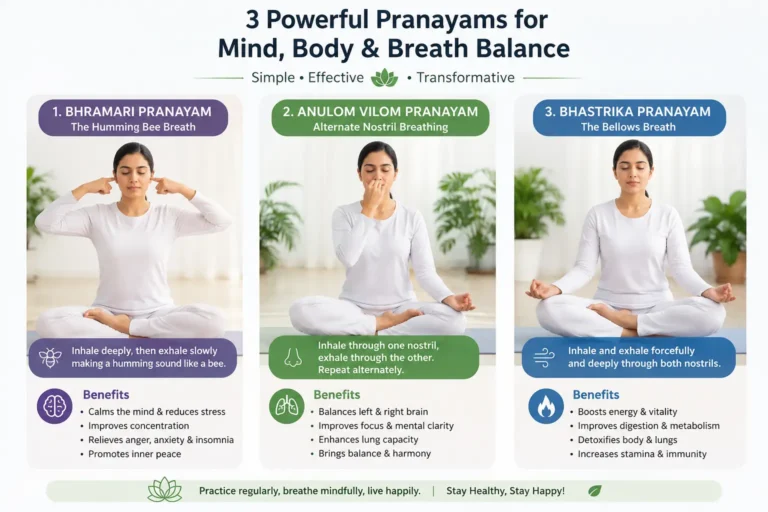
After the asanas, pranayama takes over. Because the breath is the one part of the nervous system we can consciously steer — and every slow exhale is a direct message to the brain that it is safe to soften.
And finally, sit.
Fifteen to twenty minutes of meditation a day is enough. Not more, not less — just enough to keep the mind from running the show.
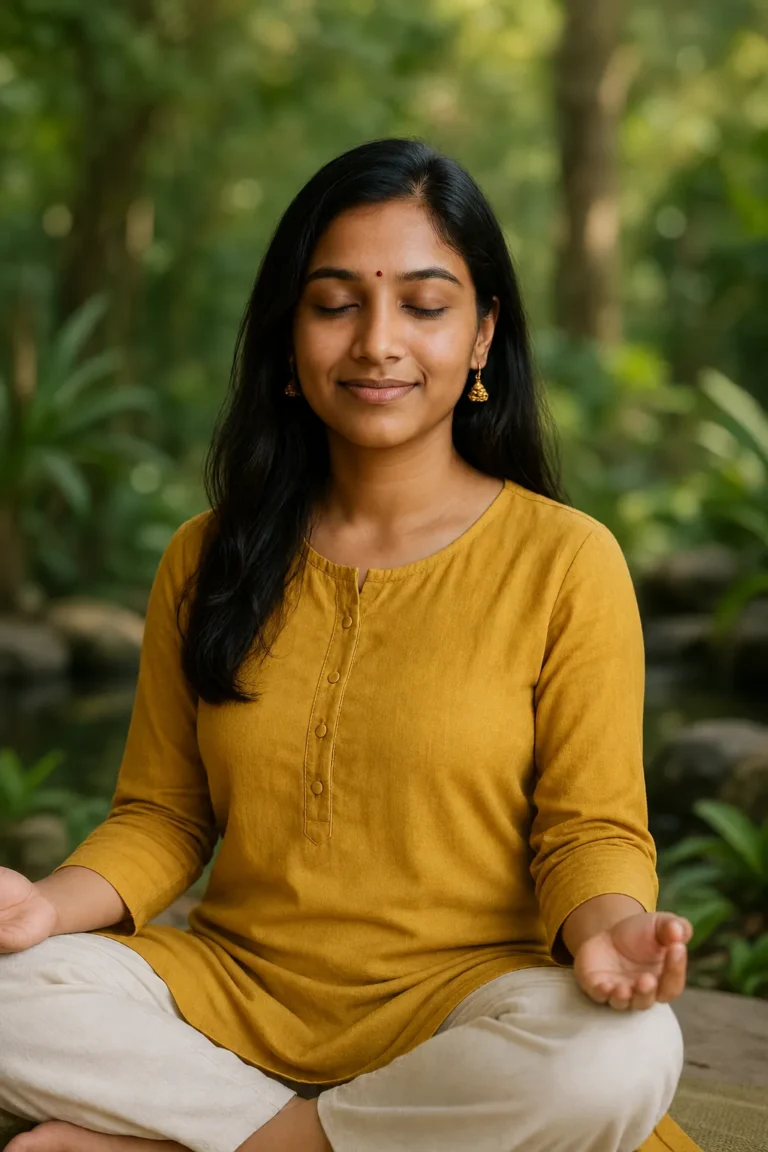
Meditation is hardest for the people who need it most. A stressed mind is already crowded; the last thing it wants is to be alone with itself. Start with breath-awareness meditation: sit straight, eyes closed, and simply follow the breath in and out. Your mind will wander — of course it will. Notice, and without judgement, bring it back. Again. And again. That gentle returning is the practice.
and the things you see will change.”
Stress is not going anywhere. But your relationship with it can shift completely — one breath, one pose, one quiet morning at a time. Begin small. Stay consistent. Let the practice do its slow, honest work.
May all be happy. May all be healthy.
Join our online yoga classes for stress relief
Live, guided sessions in Hatha yoga, pranayama, and meditation — designed for busy adults managing anxiety, burnout, and everyday overwhelm. Beginners are always welcome.