Yoga for Constipation
Yoga for Constipation: What Helps, and What to Avoid
A heavy belly, hard stools, hours lost to bathroom trips that lead nowhere. This week we talk about what yoga can genuinely do for constipation, the three areas it works on, the daily basics that matter, a gentle 20-minute sequence, and what the research really says.
“I eat well, I drink water, and still my stomach feels stuck and heavy.” Many people say a version of this.
Yoga is support, not a laxative
Let me be straight with you first. Yoga is not a quick fix, and it does not treat every kind of constipation. If the cause is a medical problem, a medicine you are taking, or a muscle-coordination issue in the pelvic floor, poses alone will not solve it.
What yoga can do is help the gut move: gentle twists and folds massage the abdomen, deep breathing relaxes the belly and the pelvic floor, movement keeps the bowels active, and a calmer nervous system means a calmer gut. For many people with ordinary, lifestyle-related constipation, that makes a real difference over a few weeks.
The right practice here is gentle and regular. Forcing deep twists or holding your breath and straining is the wrong approach and can make things worse.
Three Areas Yoga Works On
A good practice for constipation is not about flexibility. It supports three things, in this order.
Gentle Abdominal Movement
Knees-to-chest poses, reclined twists and slow clockwise belly massage press and release the abdomen in the direction the food travels through the colon. This helps the gut stay active.
Breath and a Relaxed Pelvic Floor
Slow belly breathing softens the abdomen and teaches the pelvic floor to release, not clench. A supported squat is the natural toilet posture and helps many people pass stool with less strain.
A Steady Daily Rhythm
Regular meals, fibre, water, a fixed toilet time after breakfast and never ignoring the urge to go. A regular morning practice keeps the whole routine on track, and these habits matter as much as any pose.
If you only do one thing from this post, sit on the toilet at the same time every morning after breakfast and do five minutes of the sequence below beforehand.
The Basics Your Gut Needs
Four numbers worth remembering. Your own doctor may adjust them for your health and history.
From vegetables, fruit, dal, oats and whole grains. Raise it slowly to avoid bloating
Fibre without enough water can make stools harder. Drink more in hot weather
A short walk after meals plus the sequence below. Sitting all day slows the gut
Sooner for blood in stool, severe pain, vomiting, unexplained weight loss or a sudden change in habit
A Gentle 20-Minute Digestion Sequence
Nothing here needs flexibility or experience. Practise first thing in the morning on an empty stomach, or at least two hours after a meal, with slow nasal breathing throughout.
Lying down, use light pressure. Move up the right side, across, then down the left.
Hug one knee to the chest, then the other, then both. Breathe out as you draw in.
Knees fall to one side, shoulders stay down. 90 seconds each side, no forcing.
Move with your breath to wake up the spine and belly.
A supported squat with a folded blanket under the heels. Skip if your knees complain.
Sit tall, twist from the ribs, not the neck. 90 seconds each side.
Lie back, hands on the belly. Let it rise on the inhale and soften on the exhale.
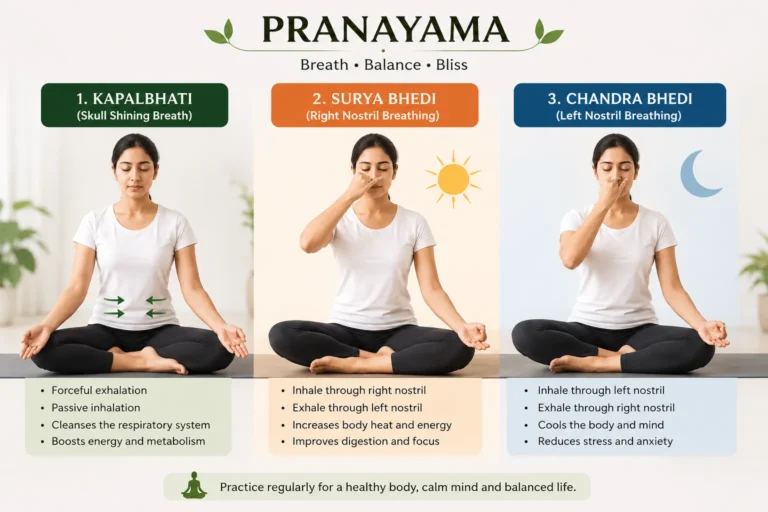
Go easy on: strong abdominal practices such as Uddiyana, Nauli and Kapalabhati unless a teacher is guiding you, and never strain or hold your breath on the toilet. If you are pregnant, have a hernia, haemorrhoids or anal fissure flare-ups, or have had recent abdominal surgery, check with your doctor before starting.
Promising, Early and Honest
Yoga in Older Adults
A small controlled study of elderly people with chronic constipation added selected yoga practices to their routine. Over four months, the yoga group used laxative medication noticeably less than the control group. The sample was small, so treat it as encouraging, not conclusive.
Read the study · Int J Community Med Public Health →Integrated Yoga Therapy Pilot
In a pilot study of 37 adults with chronic constipation, a one-week residential yoga programme (postures, breathing, meditation and diet advice) was followed by improved bowel habits and quality of life scores. There was no control group, and the authors themselves call for randomised trials to confirm the result.
Read the abstract · Rao, Metri & Singh →A Reality Check on Pelvic Floor Problems
An older study trained nine patients with a specific straining problem (puborectalis paradox) in yogic relaxation and muscle control. Only five finished, and none improved clinically. Some kinds of constipation need medical assessment and targeted treatment such as pelvic floor biofeedback, not just yoga.
Read on PubMed · Int J Colorectal Dis →The honest summary: early studies suggest yoga can help ordinary, lifestyle-related constipation, but the evidence is small. It works best alongside fibre, water, movement and medical care, not instead of them.
Be patient with your gut. It runs on routine and calm, and it does not respond to force.
Move gently. Breathe slowly. Keep a rhythm.
Join live personal online yoga classes
Reading about yoga is a start, but practising with a teacher who can see you makes the difference. In our live, personal online classes, your instructor works with you one-on-one, adjusts the practice to your body and comfort level, and corrects your posture and breathing as you go. Join from your own living room, at a time that suits you, and build a routine you can actually keep.
This article is for general education and is not medical advice. If constipation is persistent, painful or comes with blood in the stool or unexplained weight loss, please see a qualified doctor.
Wishing you good health and happiness. Hari Om. 🙏