Kapalbhati Pranayama
Kapalbhati: The Breath That Brightens
A complete guide to one of yoga’s most powerful cleansing practices — its meaning, how to do it step by step, its many benefits, and the mistakes to avoid.
Kapalbhati is a highly effective cleansing practice — one of the six Shatkarma kriyas in yoga — used to purify the lungs and refine the breath. Many practitioners also count it among the pranayamas. In this guide we’ll cover what it means, how to do the normal and advanced forms, its benefits, the precautions to keep in mind, and the common mistakes people make without realising it. Let’s begin with the meaning and benefits, then move into the practice itself.
What does Kapalbhati mean?
Kapalbhati is a word from the yogic tradition, made of two parts. Kapal means the head or forehead, and bhati means brightness or radiance. The meaning itself reveals a benefit — the practice brings a natural glow and brightness to the face. With regular practice, that radiance becomes visible not just on the skin, but in a clearer, lighter state of mind.
The benefits of Kapalbhati
There are a great many. These are the major ones — a few more we’ll mention along the way during the practice.
- 01 Radiance for the face. True to its name, it brings brightness and a healthy glow to the complexion.
- 02 Better digestion. It is excellent for digestion and helps relieve acidity and gas-related problems.
- 03 Helps reduce belly fat. Regular practice supports the loss of stubborn abdominal fat.
- 04 Stronger lungs. Because we breathe out forcefully, it strengthens the lungs and increases their capacity.
- 05 Clears the lungs. It helps remove blockages and clear stale air from the lungs.
- 06 Improves circulation. It increases the supply of fresh blood to various parts of the body.
- 07 Energises the body. It activates the system and clears away lethargy and dullness.
- 08 Sharpens the mind. It activates the brain cells and improves memory and concentration.
- 09 Spiritual benefits. Kapalbhati has spiritual paybacks too — it activates the chakras and supports a higher, greater awakening.
How to practise Kapalbhati
For easy understanding, let’s divide the practice into two parts: your posture and your breath.
1 · The posture
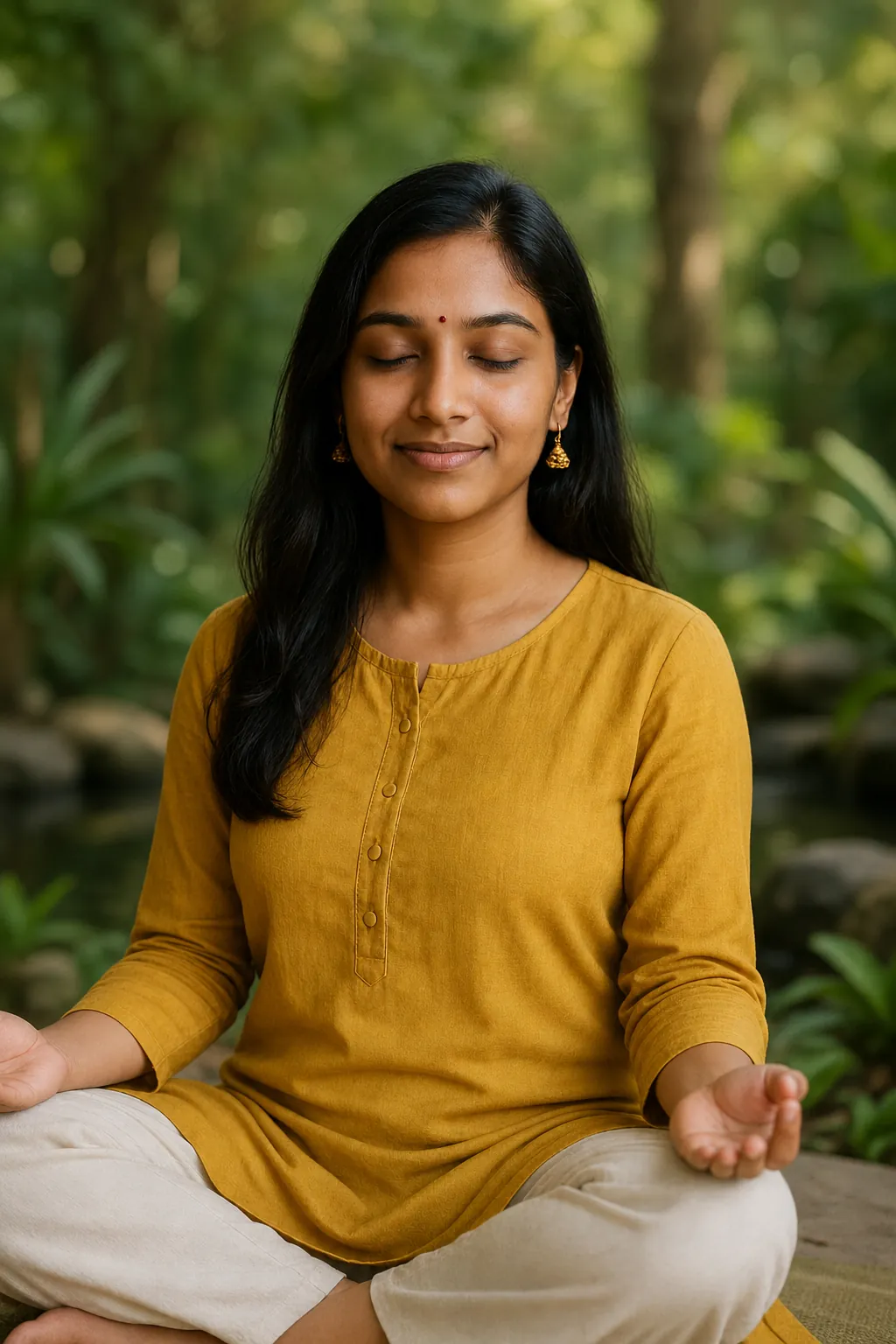
Keep your back and neck straight. Sit in any meditative posture you find comfortable — Sukhasana, Padmasana, or Siddhasana. If you cannot sit on the floor, sitting on a chair is perfectly fine. Rest both hands on your knees in Chin Mudra, and gently close your eyes. This is your pose for Kapalbhati.
2 · The breath
Before starting, take a few normal breaths — inhale, exhale. Then begin: exhale forcefully through the nose. Forget about the inhalation entirely — it happens automatically. Place your full attention on the exhalation; this is the only main part of the practice, so stay aware of it. With each forceful exhale, your stomach naturally draws inward. That is the whole practice.
The variations
Alternate-nostril Kapalbhati. Here you exhale through a single nostril at a time, using Nasika Mudra with the fingers to manage the breath. Everything else stays the same as the basic technique. This version is more powerful than normal Kapalbhati, so it should only be attempted once you have mastered the basic form.
Advanced Kapalbhati with Kumbhaka (breath retention). This third method is useful for spiritual aspirants only — it is not for everyone. General practitioners should stick to techniques 1 and 2.
How many rounds?
Beginners should do 2 to 3 rounds every day, with each round being 40 to 60 strokes. After every round, pause for a while and let your breath settle to normal before starting the next one.
Slowly, with practice, you can increase the rounds and the strokes — 60 to 80, then 80 to 100 and beyond, always according to your comfort.
After a round you may notice a spontaneous pause in the breath — a natural retention. That’s a sign you are doing very well. In it you may feel an enormous calm and peace in the mind. Whatever you feel, simply notice it and let it go — the journey toward higher consciousness is a long one.
Common mistakes to rectify
A few errors creep in unknowingly. Be aware of them.
Straining the facial muscles while exhaling. Keep your face completely relaxed throughout.
Actively pulling in the inhale. Don’t focus on inhaling — as said, it happens on its own.
Precautions
- Those with very high blood pressure, severe back pain, heart disease, or frequent headaches should practise only under supervision — otherwise the condition may worsen.
- Women should avoid Kapalbhati during pregnancy and menstruation.
- Anyone who has had recent surgery of the abdomen, back, or thoracic region should avoid the practice.
That’s everything about Kapalbhati. If you have any doubt about the practice, ask in the comments — I’ll surely reply.
Thank you so much for your valuable time. May all be happy and healthy. 🙏