
Yogic Food and Nutrition
Yogic Food: The Half of Your Practice Nobody Talks About
Yoga is not just what you do on the mat — it is also what lands on your plate. This week we talk about ahara (diet), the three yogic food categories, how much nutrition your body actually needs each day, and we cook a zero-oil recipe that is genuinely kind to your heart and your waistline.

“I practiced yoga every single day, but I never got the results I expected.” I have heard some version of this from clients and friends more times than I can count.
Your mat time is only half the story
Every time I hear that complaint, the answer is almost always the same: tamasic food. Rolling out your mat for an hour a day and then eating carelessly for the other twenty-three is not going to give you a hundred percent of what yoga can offer.
Most yoga teachers today teach asana beautifully but say very little about ahara — what and how we eat. It’s a real gap in how yoga is taught, and it’s one of the biggest reasons sincere practitioners plateau.
Diet matters in yoga just as much as the practice itself. The ancient texts didn’t separate the two — they never do.
Three Kinds of Food, Three States of Mind
Yogic tradition divides every meal into three gunas — qualities that shape not just the body, but the mind.
Sattvic
The most wholesome of the three. Fresh fruits, vegetables, whole grains, nuts and milk — light, pure and easy to digest. It calms the mind and is considered the ideal diet for a yoga practitioner.
Rajasic
Overly sour, spicy and stimulating food — think amla, green chillies, heavy spice. It energises the body but in excess it agitates the mind and unsettles the nervous system.
Tamasic
The lowest rung. Stale, reheated, flavourless food — leftovers that sat in the fridge overnight. It dulls the body and mind and is the single biggest reason yoga practitioners don’t see the results they expect.
To get the full benefit of your yoga practice, your food deserves the same attention as your asana.
What Your Body Needs in a Day
To stay healthy and energetic, here’s roughly what an average adult needs daily — though it always shifts with your work, weight and age.
At 60kg, aim for roughly 60g a day
Varies with activity, weight and age
From leafy greens, lentils, jaggery
Needed only in small, steady doses
Zero-Oil Cooking, Full Flavour
We assume food without oil must be bland. It isn’t. With the right spices and technique, a zero-oil meal can taste just as good as anything cooked in a pan of ghee — and today I’ll show you exactly how.
Refined oil, sitting in most Indian kitchens, is one of the biggest silent causes of disease. Oily food builds up as fat that slowly clogs the arteries around the heart and the rest of the body.
If you do need to cook with oil, mustard or sesame oil in small quantities is the better choice. But if you already live with heart disease or obesity, it’s best to avoid oil altogether — a well-built zero-oil plate already gives your body all the fat it needs. No extra oil required.
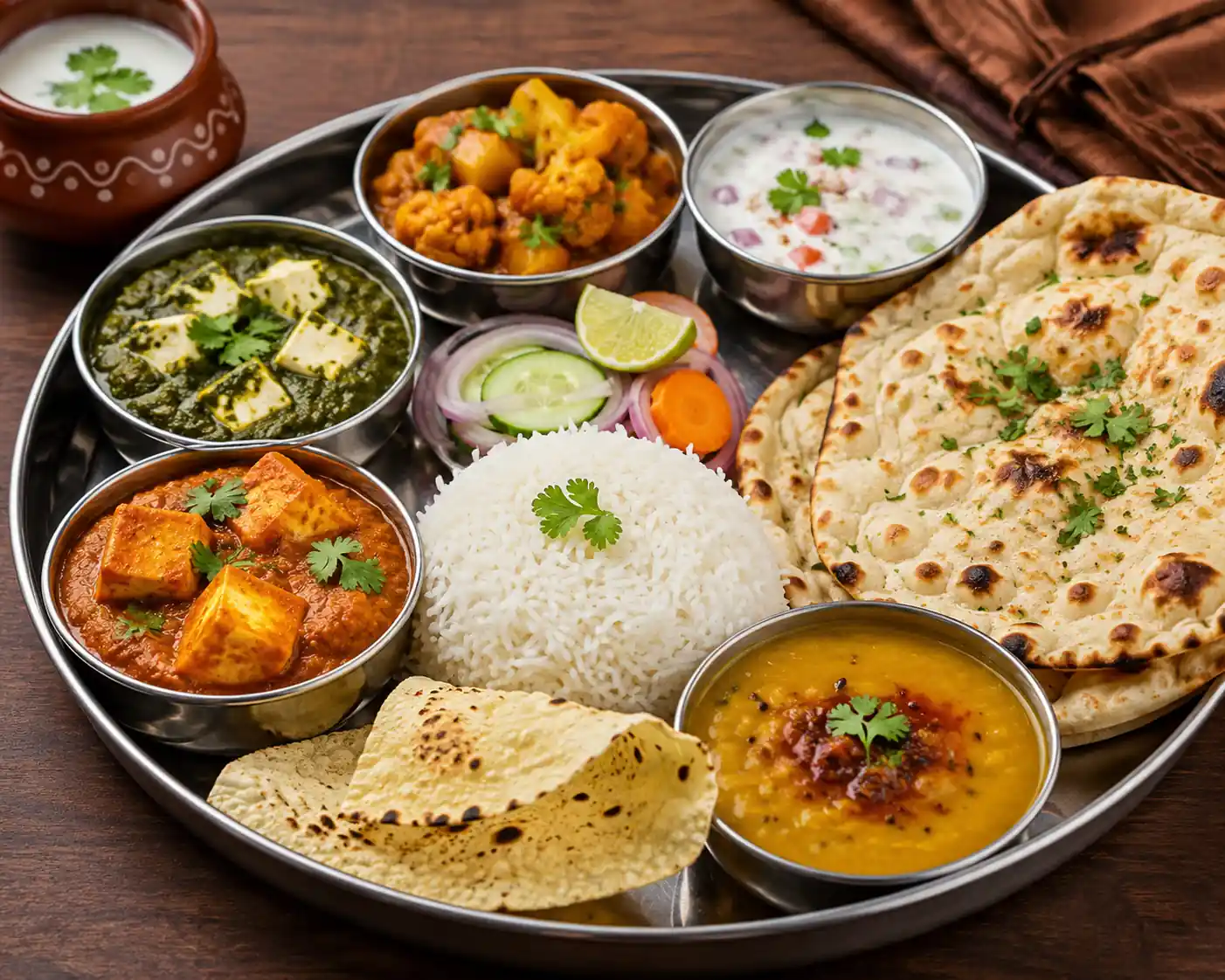
This one meal alone carries nearly every nutrient your body asks for, and keeps you well clear of the diseases that a heavy, oily diet invites in.
Food Really Can Reverse Disease
Dr. Dean Ornish
The renowned American physician led a landmark study proving that a low-fat, plant-based diet combined with yoga and stress management could reverse coronary artery disease without drugs or surgery — angina dropped by over 90% in just three weeks.
Low-Fat, Plant-Based Trials
NIH researchers found people eating a low-fat, plant-based diet naturally ate hundreds of fewer calories a day than on a low-carb diet — and were the only group to lose meaningful body fat, without even trying.
Corporate Wellness Data
A multicenter workplace trial found a low-fat, oil-light plant-based diet improved body weight, blood lipids and blood sugar control across thousands of employees — proof this works outside a lab, too.
A good, nourishing diet strengthens the immune system, keeps body and mind healthy together, and adds years to your life.
Never take your everyday food lightly — it shapes your practice, your health and your years.
Eat well. Practice well. Live well.
Join our online yoga classes
Wishing you good health and happiness. Hari Om. 🙏