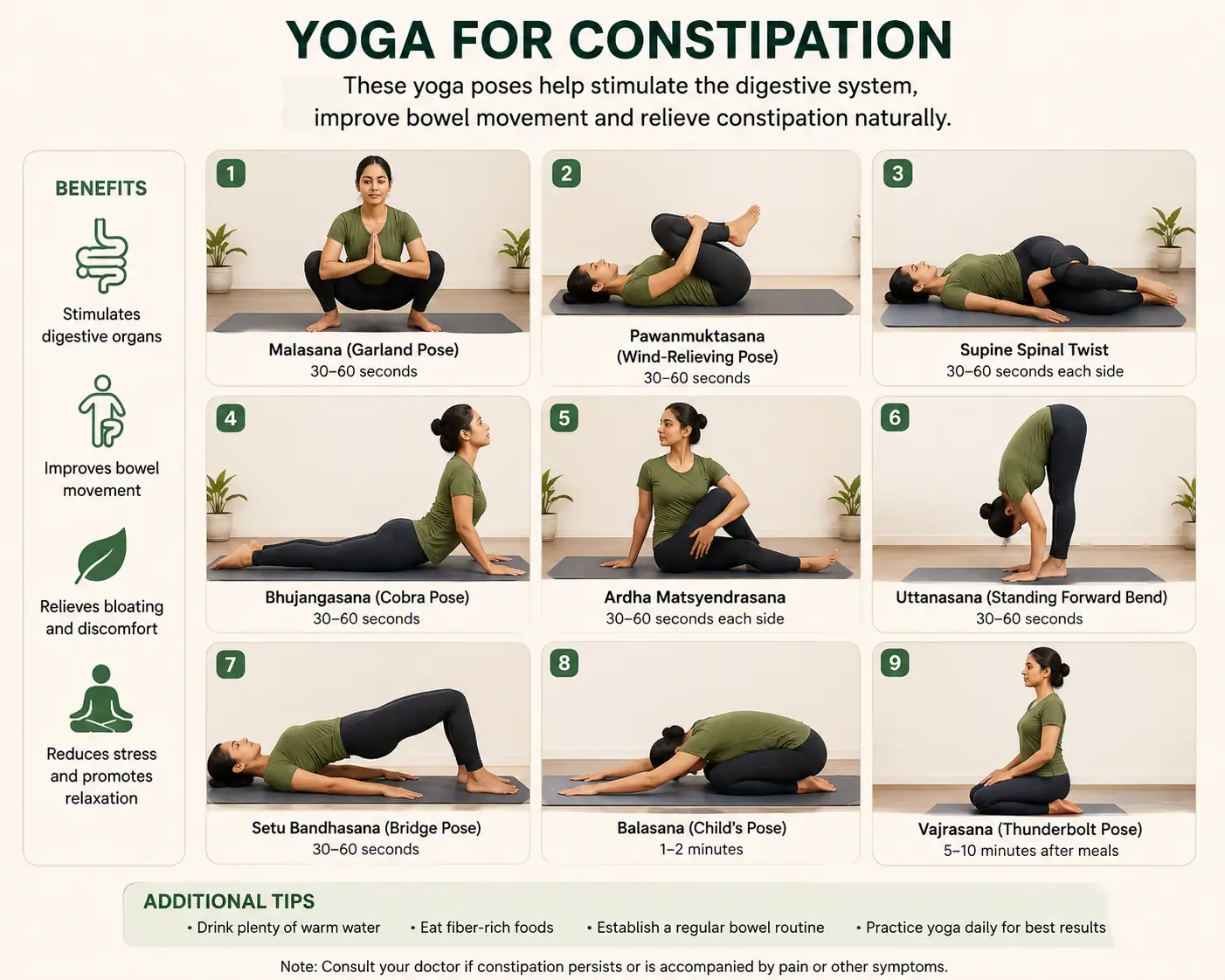
Yoga for constipation
Yoga for Constipation: The Ancient Practice That Cleanses Your Gut in 90 Minutes
Bloating, gas, sluggish mornings, that constant heaviness after every meal — your digestive system is asking for help. Shankhaprakshalana is a 2,500-year-old yogic technique that flushes your entire digestive tract from mouth to colon, without a single pill or laxative.
Today we’re going to talk about a practice that cleanses your digestive system to its deepest layers — and offers real relief from constipation, gas, bloating, acidity, and the dozens of downstream problems that follow when your gut isn’t moving well.
This isn’t a trending detox. It’s not a supplement. It’s a technique documented in classical hatha yoga texts, refined over centuries by monks who understood something modern medicine is only now confirming: your digestive tract is the engine room of your entire body.
In the next few minutes, you’ll learn exactly what Shankhaprakshalana is, how it works, who should practise it, who absolutely must avoid it, and what the research says.
“The gut is called the second brain for a reason. When it’s clean, everything upstream — mood, sleep, skin, focus — quietly falls back into place.
First, understand your digestive system
Before we begin the practice, you need to understand a few fundamentals about digestion — because that context makes the “why” behind Shankhaprakshalana obvious.
Your digestive tract is a single continuous tube, roughly 9 metres long, running from your mouth to your rectum. It’s often called the powerhouse of the body, and for good reason: this is the only system that converts external matter — food, water, air — into the cells, hormones, and energy that keep you alive.
When it works well, everything works well. When it stagnates, toxins (called ama in Ayurveda) accumulate along the intestinal walls. Undigested residue ferments. Beneficial bacteria die off. And the symptoms you notice — the bloating, the fatigue at 3pm, the dull skin, the disturbed sleep — are just the surface signals of a much deeper problem.
What is Shankhaprakshalana?
The word breaks down beautifully in Sanskrit. Shankha means conch shell — because the digestive tract, when you trace it, coils exactly like one. Prakshalana means to wash completely. So the name literally translates to “washing the conch” — a full-length rinse of the entire 9-metre tube.
The mechanism is elegantly simple:
- You drink two glasses of warm, lightly salted water.
- You perform a specific sequence of five asanas.
- Each posture squeezes and releases a different segment of the digestive tract — stomach, small intestine, colon — pushing the saltwater through like water through a garden hose.
- You repeat the water-plus-asanas cycle until the water leaves your body as clean as it went in.
That’s the whole practice. No supplements. No fasting for days. In roughly 60 to 90 minutes, your entire digestive tract is physically flushed clean.
The five asanas of Shankhaprakshalana
What the research actually says
Traditional practitioners have been prescribing this cleanse for centuries, but the last two decades have brought serious scientific attention to yoga-based interventions for digestive disorders. A few findings worth knowing:
Note: research on Shankhaprakshalana specifically is still emerging, but the broader evidence base on yogic interventions for functional gut disorders is now substantial.
Who should — and who should not — practise it
- Chronic constipation and irregular motion
- Persistent bloating and gas
- Sluggish digestion and acidity
- Skin dullness linked to gut issues
- Anyone in general good health, over 18
- You are pregnant or menstruating
- You have ulcers, hernia, or IBD
- You have uncontrolled blood pressure
- You have kidney or heart conditions
- You are under 18 or over 65
Important: Always practise Shankhaprakshalana under the guidance of a trained yoga teacher the first time. The technique is safe when done right, but the sequence, the salt concentration, and the post-practice diet all matter more than beginners realise.
The 48 hours after matter more than the practice itself
This is the part most people skip, and it’s why they don’t feel the benefits. After a full cleanse, your digestive tract is essentially a blank slate — the mucosal lining is thin, the bacterial ecosystem is reset, the enzymes are quiet. What you eat next literally programs how your gut behaves for weeks.
For the first meal, traditional guidance is khichdi — soft rice and split mung dal cooked with a little ghee, no chilli, no onion, no garlic. For the next 48 hours: no cold drinks, no raw vegetables, no dairy, no fried food, no caffeine. Warm, simple, cooked meals only.
Do this right, and the effects last months. Skip it, and you undo the whole thing in a single meal.
Written for the Yognic community — where ancient practice meets modern living, one online class at a time.