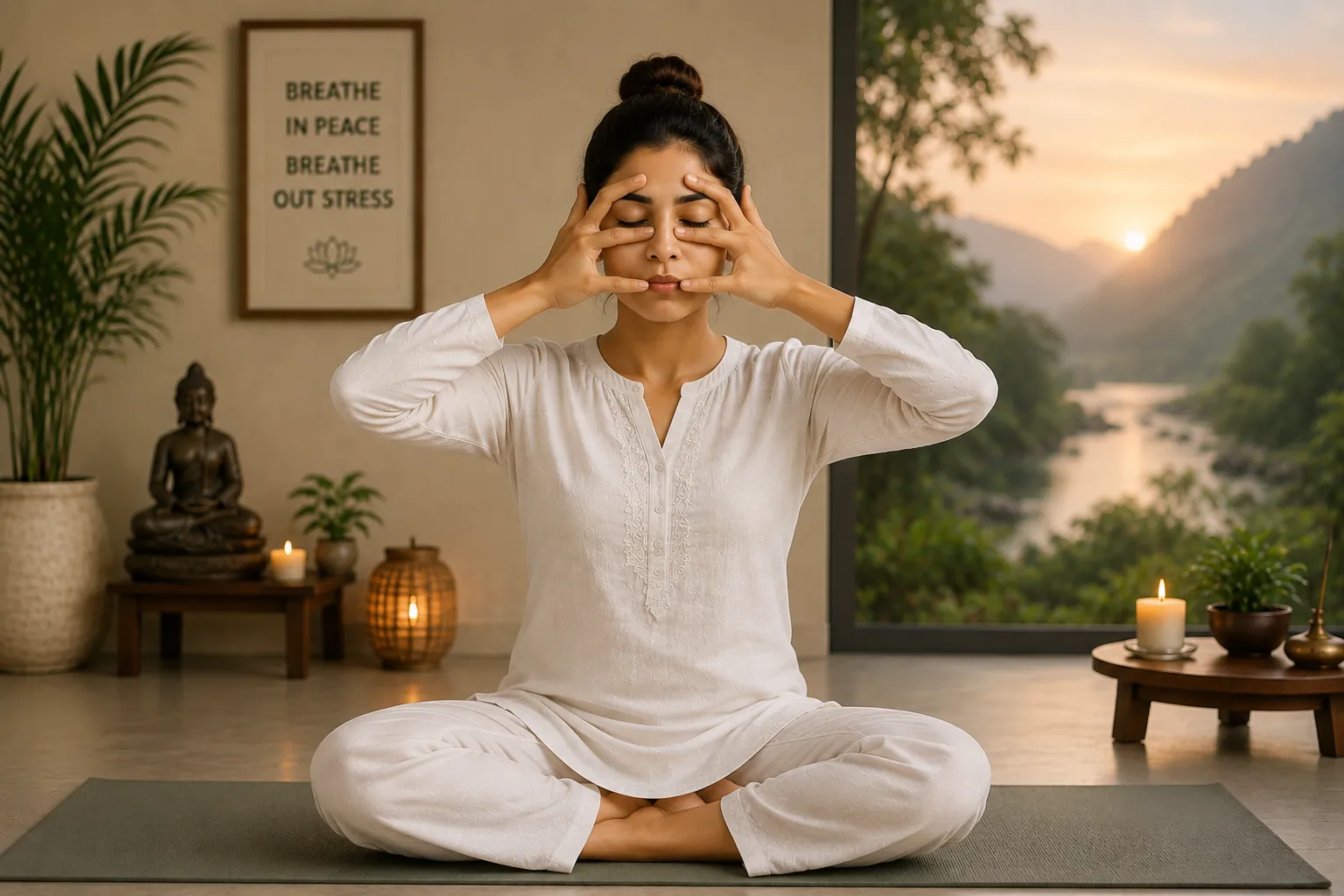
Bhramari Pranayam
Bhramari Pranayama: The Humming Bee Breath for a Calm Mind and Deep Sleep
An ancient breathing practice from the yogic tradition that quiets anxiety, lowers blood pressure, and restores the nervous system in minutes a day.
Stress levels today are higher than at any point in recent memory. A polluted environment, irregular habits, processed foods, and the aftershocks of years of lockdowns and uncertainty have left many of us running on a nervous system that never fully switches off. One of the first casualties of this constant tension is sleep — and once sleep goes, everything else begins to unravel.
The rishis of ancient India understood the mind-body connection long before modern science named it. Among the many tools they developed, one stands out for its remarkable simplicity and immediate effect: Bhramari Pranayama, or the Humming Bee Breath.
“Bhramari is one of the best breathing exercises to free the mind of agitation, frustration and anxiety — and one of the simplest tools we have for a truly sound sleep.”
What is Bhramari Pranayama?
Bhramari is the Sanskrit name for the Indian black bee. The exhalation in this pranayama produces a soft, sustained humming sound — remarkably similar to the drone of a bee — which is exactly how the practice earned its name.
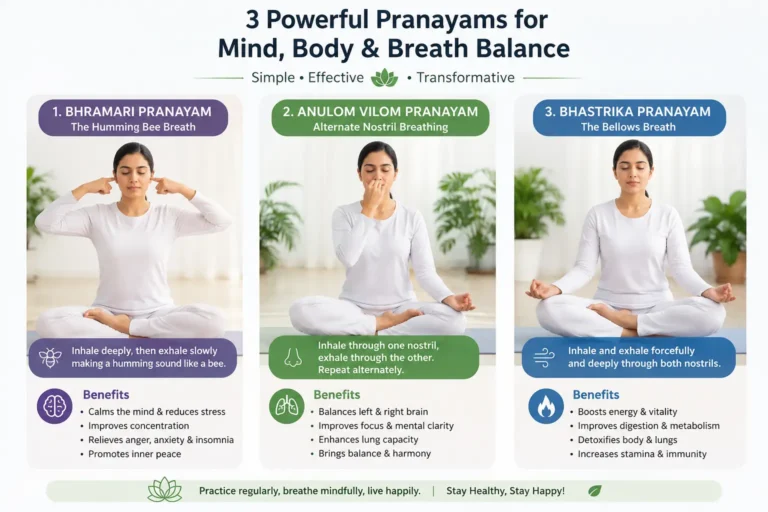
The technique is deceptively simple: a deep inhale through the nose, followed by a long, humming exhale with the ears gently closed. Yet within that hum lies a physiological cascade — vagal nerve stimulation, increased nitric oxide production, and a measurable shift into parasympathetic dominance — that few other practices can match in under five minutes.
What research says about the humming breath
A study published in the International Journal of Yoga found that regular Bhramari practice for 20 minutes daily produced measurable reductions in both systolic and diastolic blood pressure in hypertensive participants within a few weeks.
Research by Weitzberg and Lundberg (Karolinska Institute) showed that humming during exhalation increases nasal nitric oxide by roughly 15 times compared to quiet breathing — a molecule linked to vasodilation, immune defense, and sinus health.
Clinical trials have documented enhanced HRV and parasympathetic activation following Bhramari sessions — indicating a genuine shift out of the fight-or-flight state that underlies most modern stress disorders.
Studies conducted at AIIMS and other Indian medical institutions have reported significant improvements in generalized anxiety, sleep quality (measured via the Pittsburgh Sleep Quality Index), and perceived stress after 8–12 weeks of daily practice.
The benefits, one by one
How to practice Bhramari
A step-by-step guide you can follow tonight.
-
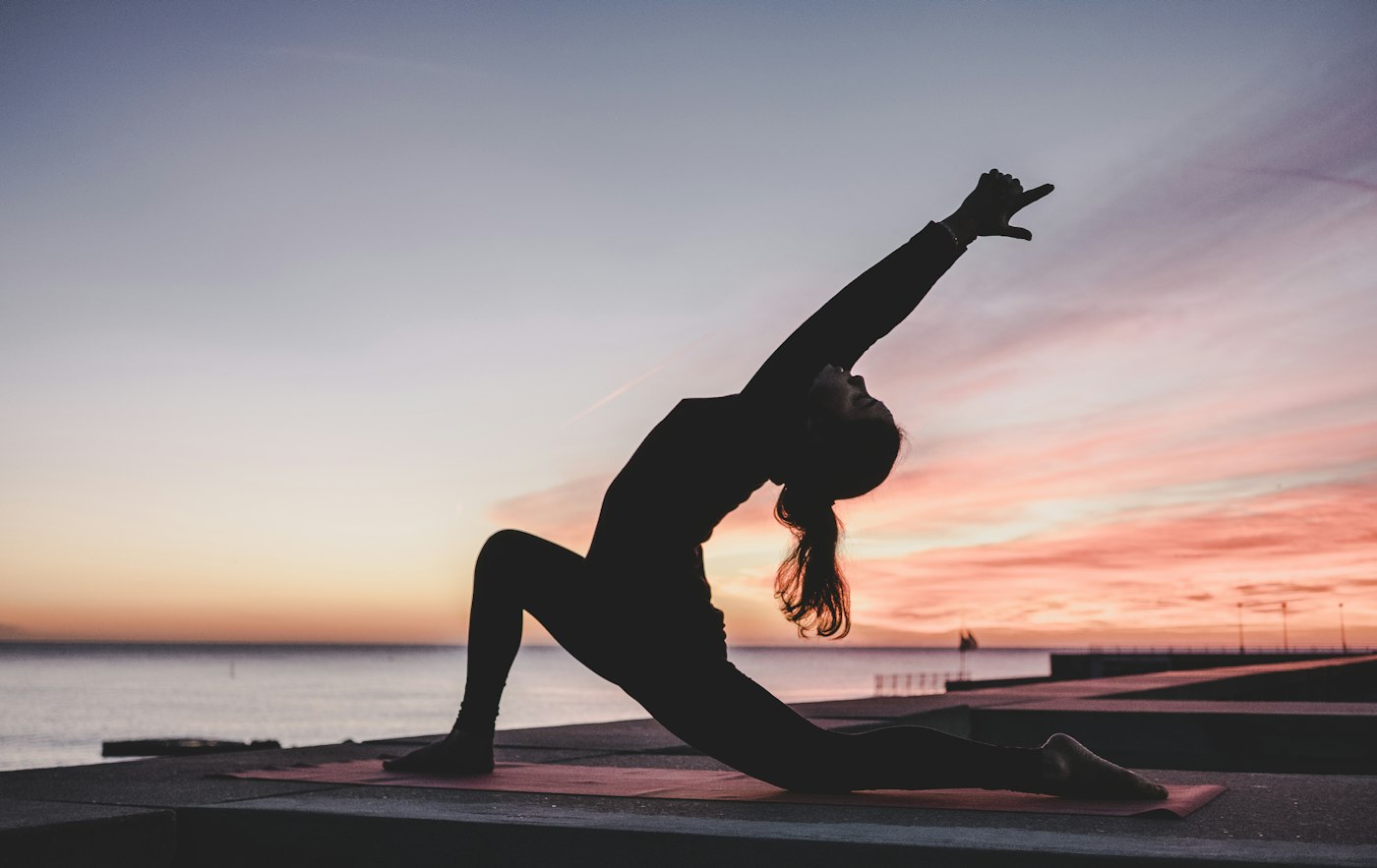
1Sit comfortablyChoose any meditative posture — Sukhasana or Padmasana works well. If sitting on the floor is difficult, a chair is perfectly fine. Keep your back and neck straight.
-
2Close the eyes, soften the bodyLet the shoulders drop. Release the jaw. Allow the belly to relax completely.
-
3Touch your tongue to the soft palateThis activates the parasympathetic nervous system, deepens calmness, sharpens concentration, and empowers the brain.
-
4Adopt Shanmukhi MudraUse your thumbs to gently close your ears, index fingers on the forehead, middle fingers over closed eyes, ring fingers just above the upper lip, and little fingers just below the lower lip. The purpose is to withdraw the senses inward — a technique known as pratyahara.
-
5Inhale deeply through the noseFill the lungs slowly and completely, without strain.
-
6Exhale with a humming soundKeeping the mouth closed, produce a soft, steady humming — the sound of a honey bee. Let it be long, smooth, and even. This is one round.
-
7RepeatBegin with 9 rounds. Over weeks of practice, extend to 10–15 minutes. During periods of extreme stress or tension, 20–30 minutes is safe and deeply effective.
Some sources claim Bhramari has no precautions — this is not quite accurate. If you have any ear infection or active ear problem, avoid the practice until it has fully cleared up. If you have severe hypertension or a cardiac condition, begin under the guidance of a qualified teacher.

A final thought
In an age when we look outside ourselves — to pills, to screens, to endless supplements — for something that will finally quiet the mind, it is humbling to remember that one of the most effective tools was given to us thousands of years ago, and it costs nothing. A few minutes of humming, done daily, can change the way you sleep, the way you speak, and the way you meet the world.
Try it tonight. Nine rounds before bed. Notice what shifts.
Learn Bhramari — and the full path of yoga — with a live teacher
Join our online yoga classes for personal guidance on pranayama, meditation, asana, and diet — from beginner-friendly sessions to deep, traditional practice.
If you found this useful, please share it with someone who needs a calmer night’s sleep.
May all be happy. May all be healthy. 🙏