Anulom Vilom Pranayam
Anulom Vilom
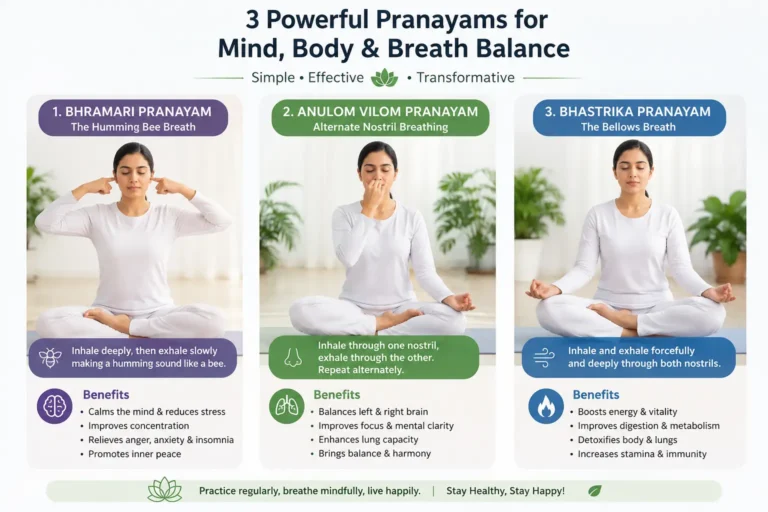
The art of balanced breathing — also known as Nadi Shodhana Pranayama, the practice of alternate nostril breathing.
Calm, clarity and balance — in just a few quiet minutes a day.
In today’s world, time is the one thing none of us seem to have. We are so busy in our lives that we rarely make time for ourselves.
That is exactly why we need a practice that gives the maximum benefit in the least amount of time. This is where the wonderful practice of Anulom Vilom — also called Nadi Shodhana Pranayama — comes in. Some people simply call it Anulom Vilom, and that is perfectly correct too.
So what makes this practice so wonderful and amazing? Because there is no limitation to it. It is very easy to do, and it takes very little time.
Backed by research, felt in the body
A great deal of research has been carried out on the effects of Anulom Vilom, and scientific evidence shows its positive impact on brain function. A well-known retreat centre in Sweden studied the practice and found that, done regularly, Nadi Shodhana improves brain function, supports emotional balance, and increases the power of concentration.
What was once passed down through yogic tradition is now being confirmed by modern study — a rare meeting of ancient wisdom and evidence.
What is Nadi Shodhana?
In yogic terms, Nadi Shodhana means cleansing the Nadis. But first, what are the Nadis?
The Nadis are our energetic irrigation system — in essence, they keep us alive. According to many Tantric texts, the human body contains 72,000 Nadis that channel the Prana, our life force, to every single cell. We cannot see these Nadis in the body, but they exist.
Of these 72,000, three are especially important: Ida, Pingala and Sushumna.
Ida Nadi
The passive, feminine channel, associated with the Moon — a symbol of calmness and cooling energy.
When blocked, one may feel cold, low in mental energy, sluggish, or low in mood.
Pingala Nadi
The active, masculine channel, associated with the Sun — the source of heat, drive and vitality.
When blocked, one may feel heat in the body, quick temper, excessive appetite, or restless energy.
Sushumna Nadi
Sushumna is the expression of perfect balance and neutrality between Ida and Pingala. Balancing Sun and Moon awakens Kundalini Shakti through the Sushumna Nadi — and with it, higher consciousness. Nadi Shodhana balances Ida and Pingala and opens the pathway of Sushumna: the doorway to deep meditation. Simply put, meditation becomes effortless after Nadi Shuddhi.
How to practise, step by step
Sit in any comfortable meditative posture — Sukhasana, Padmasana or Siddhasana. Those who cannot sit on the floor may sit on a chair. The most important thing is that your back and neck stay straight. Why? So that you can use your lungs fully and completely with every inhalation and exhalation. When the back is hunched, the lungs cannot open to their full capacity.
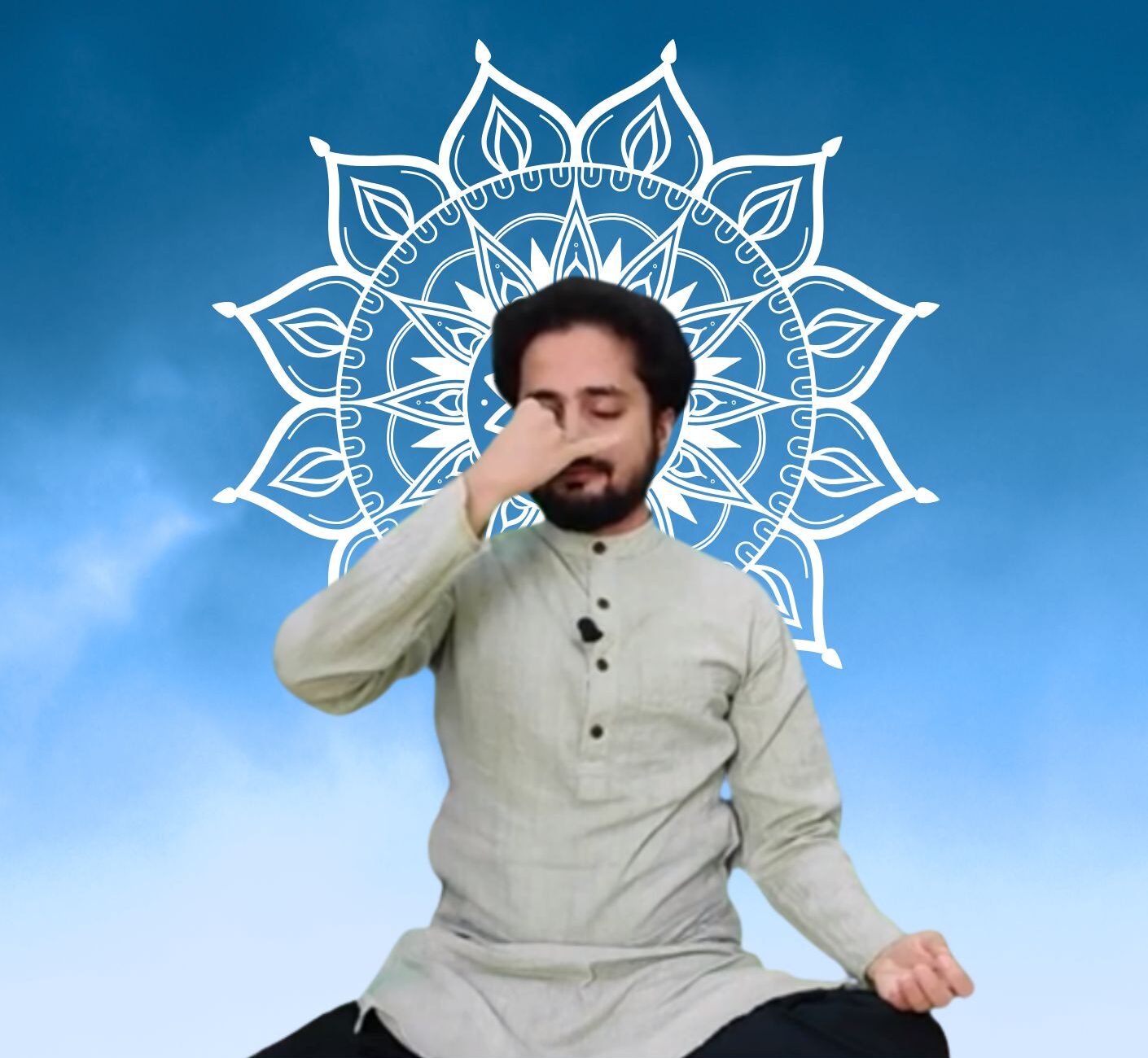
This practice is done with Nasikagra Mudra. On the right hand, fold the index and middle fingers down completely, keeping the other three fingers open — you will use the thumb and ring finger. The left hand rests in Chin Mudra on the left knee. Keep the eyes closed throughout.
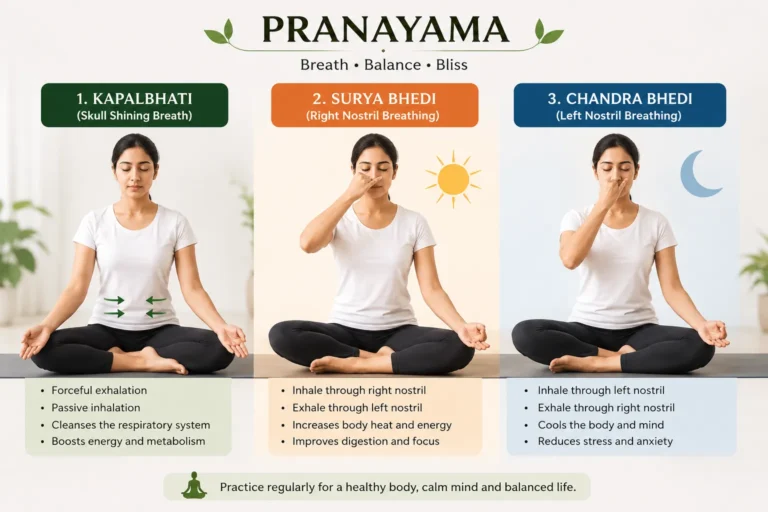
Close the right nostril with your thumb. Inhale through the left nostril, fully and completely.
Close the left nostril with your ring finger. Exhale through the right nostril, completely.
Now inhale through the right nostril, fully and completely.
Close the right, and exhale through the left. This completes one full round of Nadi Shodhana Pranayama.
Key points to remember
Never force the breath
Keep the flow gentle and natural. Do not make any breathing sound.
A light touch
Place the fingers very lightly on the nose — never pressing hard.
No Ujjayi breath
Do not add Ujjayi here. The breathing should stay completely natural.
The right timing
Best in the morning after freshening up, before breakfast. If very stressed or sleeping poorly, practise 3 times a day — morning, around 6 pm, and before bed. Always on an empty stomach, with at least a 3-hour gap after eating.
Start small, grow slowly
Beginners can start with 5 minutes or 9 rounds, gradually building to 10, 15 minutes or more.
If your arm tires
Holding the hand up for long can tire the arm — that is normal. Simply rest, breathe normally for 30–40 seconds, then begin again.
Wait before eating
After the practice, leave a gap of 20–30 minutes before your meal.
Begin & end with the left
Always start and finish with the left nostril. The left represents Ida, the Moon — a symbol of calmness. Beginning and ending here settles the mind in peace.
The gifts of Nadi Shodhana
Better respiratory health. The deep, slow breathing accesses the full capacity of the lungs, strengthening the breath itself.
Less stress and anxiety. Nadi Shuddhi balances the sympathetic and parasympathetic nervous systems, calming the whole body.
A quieter mind. By keeping the attention on the breath, we gently bring the wandering mind out of the past and future and back into the present — strengthening the neural networks that prevent rumination.
Deeper meditation. Energy is drawn upward, and the practitioner can experience powerful, mystical states in meditation.
Sharper focus. The practice improves brain function and steadily builds concentration and awareness.
Making it a daily ritual
The real magic of Anulom Vilom is not in a single dramatic session but in quiet consistency. Choose a fixed time and a fixed corner of your home, roll out the same mat, and let the practice become a small daily anchor. Some practitioners like to light a lamp or keep a window open to fresh morning air — simple cues that tell the mind it is time to slow down.
On busy days, even nine mindful rounds are enough to reset the nervous system. Over weeks, you may notice steadier sleep, a calmer temper, and a clearer head — changes that unfold gently, from the inside out. Trust the process, stay patient, and let the breath do its quiet work.
Learn Anulom Vilom the right way, from anywhere
A few small corrections in posture, mudra and breath make all the difference. Join our online yoga classes and learn pranayama online under experienced guidance — at your own pace, in your own space.
Personal 1-on-1 Classes
Book personal online yoga classes for one-on-one attention — a routine built around your body, your schedule and your goals.
Online Group Classes
Prefer company? Join our online group yoga classes and practise pranayama and meditation together with a supportive community.