
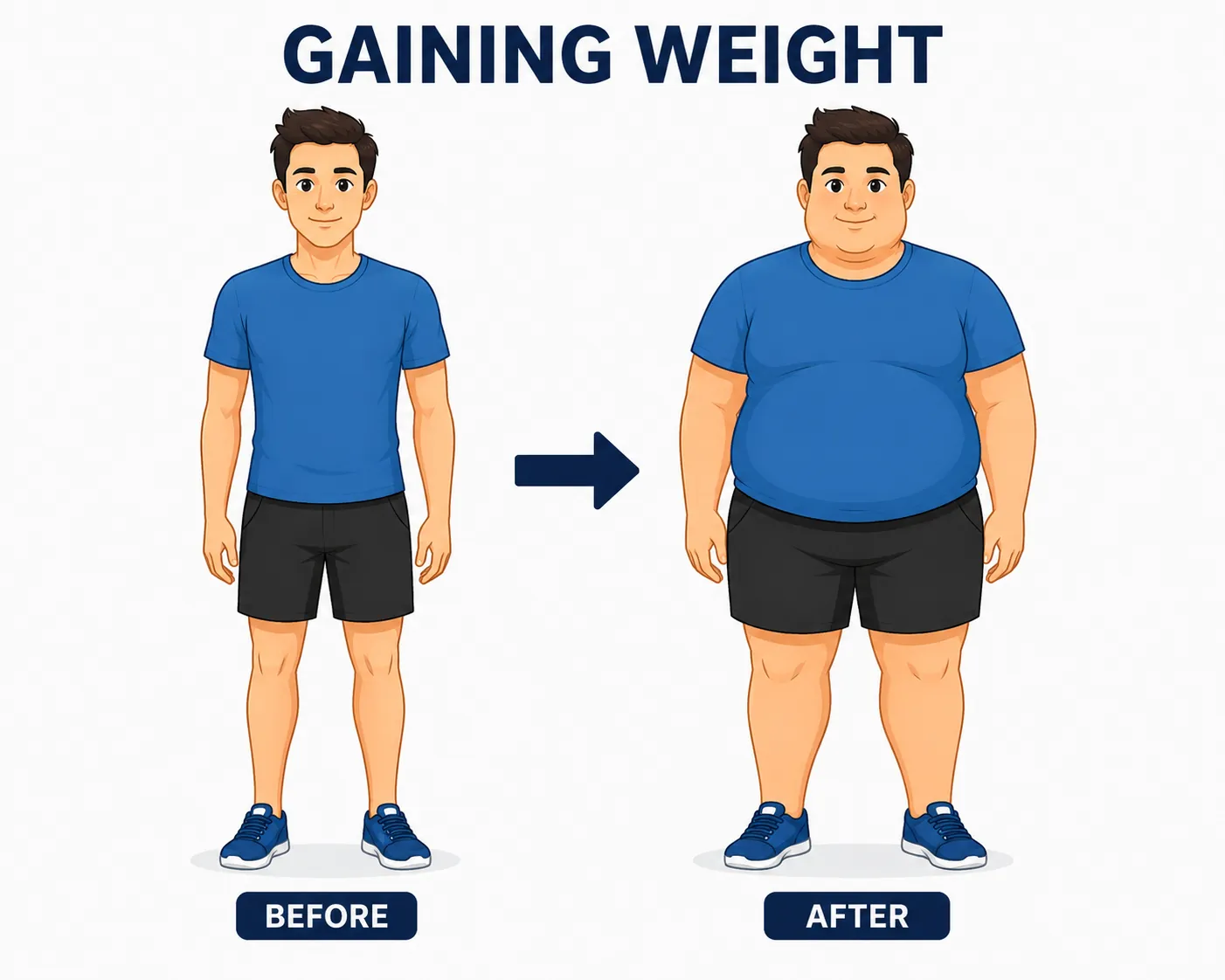
How to Gain Weight
How to gain weight — the healthy way
A full-day diet routine, honest science, and the habits that actually add lean, sustainable kilos to your frame — without junk, shortcuts, or shame.
We talk about obesity all the time — but there’s a quieter struggle on the other end of the scale. For a lot of people, gaining weight is just as hard as losing it. Metabolism, stress, appetite, genetics — all of it conspires. And the worst thing you can do about it is reach for junk food, oily snacks, and sugary drinks, because that path leads to weight, but not to health.
This is a full-day, plant-forward routine to help you put on 4–5 kg in a month — cleanly, with real nutrition, and paired with movement so the weight lands as strength, not slump.
First — are you actually underweight?
The simplest check is your Body Mass Index (BMI). It’s an estimate of body fat based on height and weight — not perfect, but a useful signal. If your BMI is below 18.5, you’re in the underweight range.
Being underweight isn’t just cosmetic. The health risks include vitamin deficiencies, weakened immunity, fertility issues, and — for children — growth and development delays. It also affects how you show up in the world: energy, posture, confidence.
Your full-day routine
Small meals every two hours. Nutrient-dense, not calorie-empty. And here’s the rule most guides miss: diet only works when it’s paired with movement. Yoga, strength, or a mix — five to six days a week. If you want structured support, an online personal class keeps the plan tailored; an online group class gives you the rhythm and accountability of a community.
“Don’t eat a huge amount at one sitting. Eat small meals frequently — every two hours — so your metabolism never stalls.”
Four small rules that do heavy lifting
An honest note before you begin
This plan lands at roughly 2,000 calories, but the right number for you depends on your age, gender, current weight, and how much you move. Someone lifting weights four times a week needs more than someone doing gentle yoga. Treat the routine as a scaffold — then let a coach fine-tune the portions.
That’s where structured coaching earns its keep. An online personal class gives you a plan built around your body, your schedule, and your kitchen. An online group class layers on community — the daily nudge that turns a good week into a good year. Either way, you’re not doing it alone.
If this was useful, share it with someone who needs it — a shared plan is a followed plan. Questions? Drop them in the comments. May you be healthy, and may you be happy.